


Poker Strategy Guide 2026: Concepts, Formats & Grinding Edge
VIP-Grinders has been helping poker players increase their win rate and maximize rakeback value since 2013. This hub organizes every strategy guide on the site by topic and skill level, from absolute beginner fundamentals to advanced solver concepts and grinder profitability math.
Each guide is written by active players and updated for 2026 conditions: current rake structures, modern solver outputs, and real bankroll numbers. Whether you grind NLHE cash games, fire MTTs, spin jackpot SNGs, or mix formats for volume, the goal is the same: make better decisions per hand and extract more value per session.
Poker Fundamentals
Every winning player builds on the same foundation: knowing which hands beat which, understanding the rules of the game, and learning the basic math that turns guesswork into informed decisions.
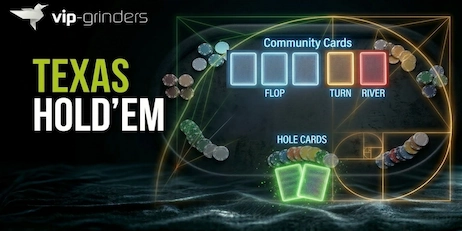
The hand rankings guide covers the full hierarchy from Royal Flush down to High Card with a visual chart you can reference while playing. Once you know what beats what, the Texas Hold’em Rules page walks you through every stage of a hand: blinds, preflop action, community cards, and showdown, with a fully worked example so you can see how a real hand plays out from start to finish.
After the rules click, the most important concept to learn is pot odds: whether calling a bet is mathematically profitable based on the size of the pot, the cost of your call, and how many cards in the deck can improve your hand. The implied odds page extends this concept to situations where you expect to win additional money on future streets, justifying calls that raw pot odds alone would reject.
From there, your next step is understanding Ranges: the full set of hands you or your opponent could reasonably hold in a given spot. Thinking in ranges rather than putting someone on a single hand is what separates beginners from intermediate players. Understanding pot odds also connects directly to how rake affects your win rate, because the rake you pay per hand is a hidden cost that eats into your edge.
Position ties everything together. The same hand that is a fold from early position becomes a profitable open from the button, because acting last gives you more information before you commit chips. This section also covers the unwritten etiquette rules every player should follow at live and online tables.


Betting & Aggression
Winning poker is built on controlled aggression. Knowing when to bet for value, when to bluff, and when to check back requires reading the board, estimating your opponent’s range, and sizing your bets to maximize expected value. If you are still learning position and ranges, work through the fundamentals above first.
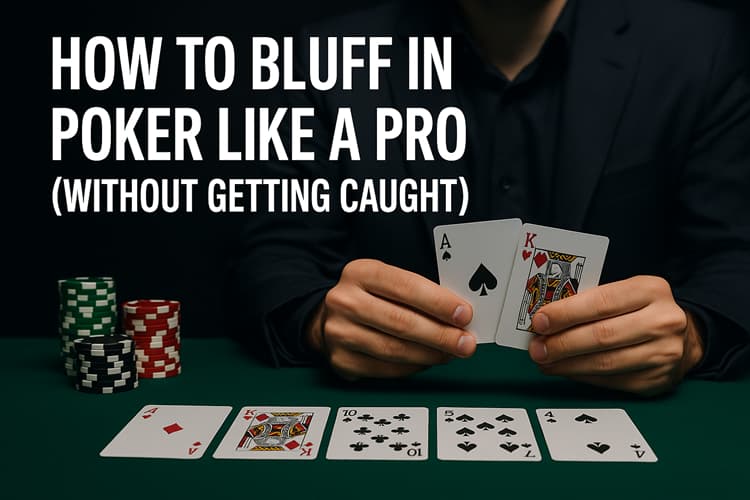
The Bluffing guide covers the three highest EV bluff spots at low and mid stakes with pot-size examples you can apply immediately. If you are already comfortable with basic bluffs, the 3-bet strategy page adds preflop aggression with position-by-position range charts showing when to 3-bet for value and when to 3-bet as a bluff.
For postflop play, the continuation betting guide explains when a c-bet prints money and when checking is the stronger line. Bet sizing ties everything together: the wrong size on the right bluff still loses money over time. Our street-by-street sizing framework covers both cash games and tournaments, and pairs naturally with the value betting guide for spots where thin value extraction separates breakeven sessions from winning ones.
This section also covers overbetting, double barreling, pot control, equity denial, check-raising, and fold equity.
Advanced Concepts
Once you are comfortable with ranges, position, and postflop aggression, the next level is studying how solvers construct theoretically optimal strategies and learning to apply that thinking at the table without memorizing every node.
The GTO and solvers guide explains the core principles of game-theory optimal play, how to run solver simulations, and when to deviate toward exploitative adjustments against specific opponent types. The goal is not to play GTO perfectly, but to use solver output as a baseline and then exploit the gaps in your opponent’s strategy.
Understanding range advantage and nut advantage on different board textures tells you who should be betting and who should be checking in any given spot. The stack-to-pot ratio (SPR) guide adds preflop hand planning, helping you decide before the flop whether a hand plays better as a big pot or small pot based on effective stacks.
For position-specific deep dives, the big blind defense and small blind strategy pages cover the two most difficult positions at the table with complete range charts and postflop heuristics. The ICM guide (coming soon) will complete this section with the math that shapes every tournament decision from the bubble onward.
Cash Game Strategy
Cash games reward patience, table selection, and the ability to exploit the same opponents over long sessions. Unlike tournaments, you can reload chips, leave when you want, and focus purely on making +EV decisions without ICM pressure or blind escalation.
The Cash Games guide is the starting point for anyone grinding online ring games, covering stake-specific adjustments from $1/$2 to NL200, table selection, session planning, and the most common leaks that cost grinders money. The Making $1,000/Month page turns win rate data into a concrete grinding roadmap with bankroll targets, volume requirements, and the role of rakeback deals in bridging the gap between marginal and clearly profitable months.
The “Is Poker Profitable?” guide answers the question every new grinder asks, using real data on win rates by stake, rake impact, and time investment. Table selection may be the single highest-impact skill for cash players: sitting at the right table with the right opponents matters more than any postflop concept.
The Fast-Fold Poker guide covers the strategic adjustments needed for Zoom, Rush & Cash, and Snap formats. This section also covers moving up stakes, identifying and exploiting recreational players, and multi-tabling optimization.
Tournament Strategy
Tournament poker demands a different mindset from cash games. Blinds escalate, stacks get shorter, and every chip you lose is worth more than every chip you gain once you are near the money. Understanding how to adjust your strategy across the early, middle, and late stages of an MTT is what separates players who min-cash from players who reach final tables.
The MTT Strategy guide covers the full tournament arc from registration to final table, including stack size adjustments, when to shift gears, and how payout structure should influence your aggression. The bubble play guide focuses on the most important phase of any tournament: exploiting tight players who are desperate to cash while protecting your own stack.
Bounty and knockout formats require fundamentally different strategy than standard freezeouts. Our bounty tournament guide merges PKO, Mystery Bounty, and progressive knockout strategy into one resource, showing how bounty value changes your calling and shoving ranges.
Fields at many online poker rooms are softer and smaller than on the biggest networks, which means more overlays and weaker opposition. This section also covers satellite strategy, MTT overlay hunting, final table play, and late registration EV analysis.



SNG & Spin Strategy
Sit & Go tournaments and jackpot-style Spins are the go-to formats for players who want high-volume, short-session grinding with clearly defined strategy. Both formats reward tight push/fold execution in the later stages and require solid bankroll management to handle the variance.
The Sit & Go strategy guide walks through every stage from early play through heads-up, with adjusted ranges for different stack depths. The Spin & Go strategy guide covers push/fold charts by stack depth, GTO and exploitative adjustments, Flash variants, bankroll management, and realistic ROI math with rakeback factored in. If you are deciding between formats, our MTTs vs Spin & Gos comparison breaks down hourly rate, variance, and rakeback differences side by side.
Game Variants
Texas Hold’em dominates online traffic, but other variants offer softer fields and unique strategic challenges that can diversify your income and make you a more complete player.
Pot-Limit Omaha is the fastest-growing format at most poker rooms, with bigger pots, more drawing possibilities, and a player pool noticeably weaker than NLHE at equivalent stakes. Our PLO guide covers starting hand selection (top 30 hands included), positional adjustments, and the postflop concepts unique to four-card poker. The Omaha Hi-Lo guide adds split-pot strategy for O8, where scooping both halves of the pot is the key to long-term profitability.
Short Deck (6+ Hold’em) has gained massive popularity in Asian markets and high-stakes circles, with adjusted hand rankings that change the value of every holding. This section also includes guides for Razz, Seven-Card Stud, Limit Hold’em, Pot-Limit Hold’em, and an NLHE vs PLO comparison.
Bankroll & Mindset
Your edge at the table means nothing if your bankroll management is wrong or tilt destroys three winning sessions in one bad night. The off-table fundamentals in this section keep you in the game long enough for your skill to compound.
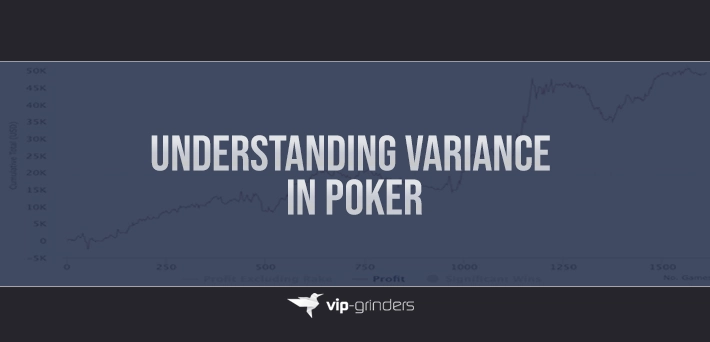
The bankroll management guide includes tables by format and stake level, showing exactly how many buy-ins you need to survive standard variance without going broke. The variance guide explains why 10+ buy-in downswings are statistically normal and shows you how to use our poker calculators to simulate your own downswing probability at any sample size.
Tilt is the most expensive leak in poker because it compounds: one bad decision leads to another, and a single session can wipe out a week of profit. The mental game guide covers tilt types, prevention strategies, and session planning techniques. The common mistakes guide identifies the most costly leaks with the actual EV cost per mistake, so you know which parts of your game to fix first. This section also covers how poker staking and backing arrangements work.


Grinder Profitability
Most poker strategy content stops at “play better hands.” That matters, but it ignores the variables that actually determine how much money lands in your account at the end of the month: how many tables you play, what times you play them, how much rake you generate, and how much of that rake comes back through your deal.
The Hourly Rate guide builds a complete $/hour framework combining win rate, table count, rake paid, and rakeback received. A player earning 5bb/100 at NL50 across 4 tables generates very different monthly income depending on whether their rakeback deal returns 20% or 40%.
The Rakeback & Strategy guide goes deeper into how your specific deal should influence bankroll management, game selection, and volume decisions. A strong rakeback deal changes the math on which stakes are profitable, which formats generate the most value per hour, and whether adding tables at a slightly lower win rate makes sense.
Session Management (coming soon) covers when to play, when to stop, and how to plan your grinding schedule around peak traffic hours and your own focus window.
Other Guides
Two standalone guides that fall outside the core strategy clusters. The home game guide covers everything you need to host a poker night with the right setup and structure. The poker tax guide explains what players need to know about reporting poker winnings.